Wednesday, December 28, 2005
"Yeah, the family had lots of buffas."
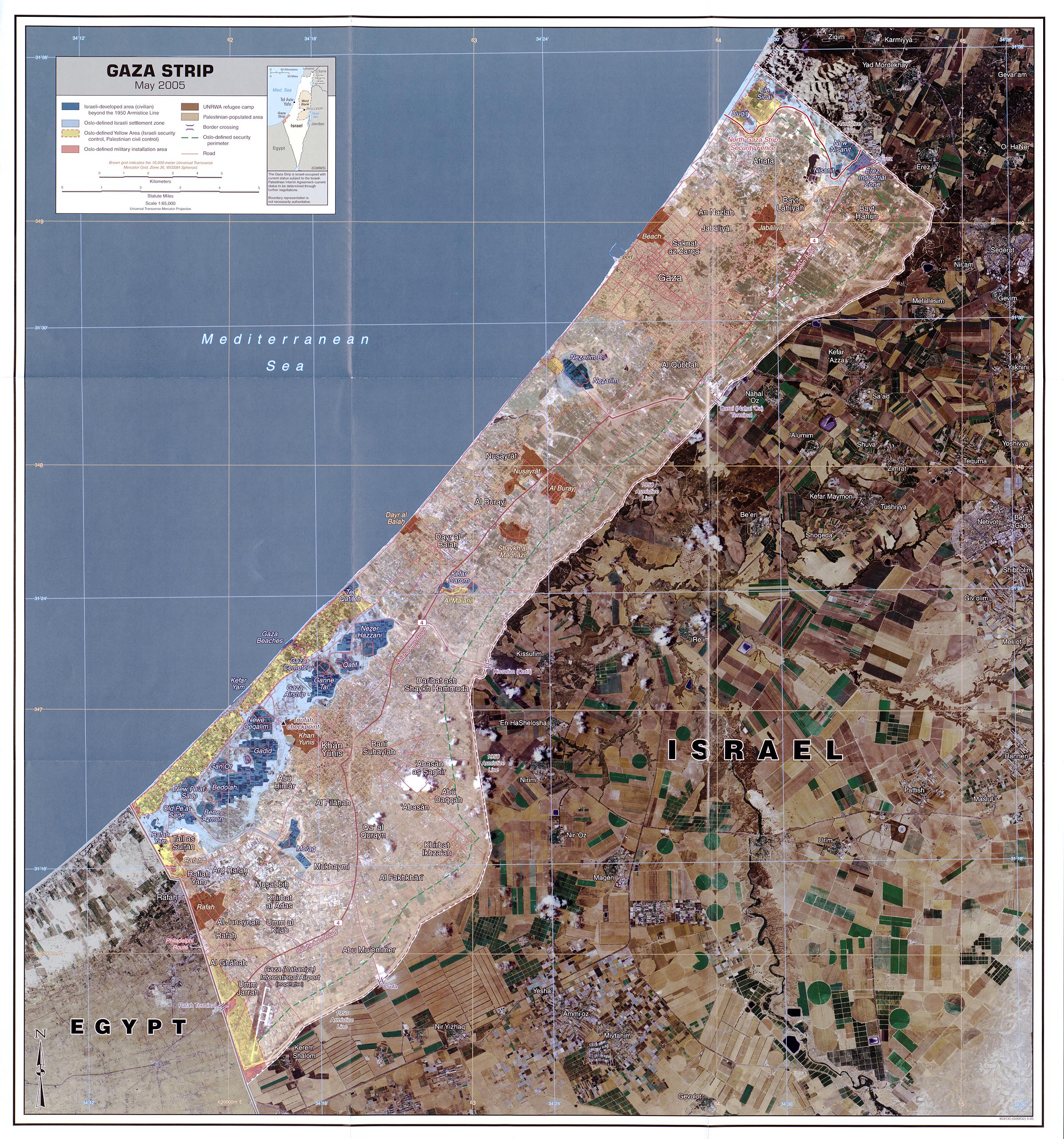
A few months back, I posted about the fact that there was absoultely no reason to leave the Northern Gaza settlements. Now I see that, now that the expected rocket attacks on Israel proper has begun, the IDF has declared a buffer zone in Northern Gaza. And it follows the exact boundaries of the settlements. Doesn't even go to the eastern border. Huh. Go figure. Now why did they pull out again?

Tuesday, December 20, 2005
In 1966, the Transit Workers Union went on strike, shutting down New York City transit for twelve days. The leader of the union at the time was Michael J. Quill; when sent to jail, he famously remarked, in his Irish brogue, "The judge can drop dead in his black robes!"
Days after the strike ended, it was Quill who dropped dead. My father, in his wisdom, attributes his death to the accumulated curses of angry New Yorkers.
Roger Toussaint, to quote Patrick Henry, should profit from Quill's example.
Days after the strike ended, it was Quill who dropped dead. My father, in his wisdom, attributes his death to the accumulated curses of angry New Yorkers.
Roger Toussaint, to quote Patrick Henry, should profit from Quill's example.
Thursday, December 15, 2005
Isn't staging a transit strike the wrong way to argue against automation of trains? Come tomorrow, lots of New Yorkers will likely be grumbling, "Replace 'em all with robots!"
Oh, and the "Miami Beach" is less funny the second time around. And when the driver might be on strike the next day.
Willaim Proxmire has died. "Oh, the Russians never got into space. Admiral Heinlein wouldn't allow it!"
I bash Artscroll a lot. So here's a bit of praise to them. I checked it out last night myself- not bad at all! Well, except for the last sentence (of Artscroll's), which is nonsense.
Oh, and the "Miami Beach" is less funny the second time around. And when the driver might be on strike the next day.
Willaim Proxmire has died. "Oh, the Russians never got into space. Admiral Heinlein wouldn't allow it!"
I bash Artscroll a lot. So here's a bit of praise to them. I checked it out last night myself- not bad at all! Well, except for the last sentence (of Artscroll's), which is nonsense.
Wednesday, December 14, 2005
A short while back, a thought occured to me: In the old days, capital punishment used to be handed down for all sorts of things. Now that it's reserved (where it's given) for murder only- and then only in cases of certain murders- it seems wrong to give anything less. After all, if you're going to give a rapist 25 to life, how is it right to give a murderer the same?
Then, hearing a news report about Ken Lay this morning, it occured to me as well that the opposite is true: If we give 25 to life for murderers, it doesn't seem quite right to do the same for any other crime, particularly white collar ones.
Anyway, just a thought. Here's another: Who does Jesse Jackson think he is? Coming to New York to stir up a transit strike? Get lost, you poser!
Here's an email I just got:
Isn't it a bit chutzpadik for the son of a Nobel Prize winner who's traded on his name to write a book in defense of nepotism? Or is it just no-yichus me complaining?
Bus driver: "Union Turnpike subway station. Next stop, Miami Beach." If only.
Finally, Yay!
Then, hearing a news report about Ken Lay this morning, it occured to me as well that the opposite is true: If we give 25 to life for murderers, it doesn't seem quite right to do the same for any other crime, particularly white collar ones.
Anyway, just a thought. Here's another: Who does Jesse Jackson think he is? Coming to New York to stir up a transit strike? Get lost, you poser!
Here's an email I just got:
As we approach the new year, may you and yours find peace and love among familySick. May I point out that Ramadan has been over for weeks? That's one renewal (it's from a journal I get) I'm not making.
and friends as you celebrate the Solstice, Christmas, Hanukkah, Ramadan, or
other holidays. ["And a Kwazee Kwanza!"- NL, channeling Krusty]
Isn't it a bit chutzpadik for the son of a Nobel Prize winner who's traded on his name to write a book in defense of nepotism? Or is it just no-yichus me complaining?
Bus driver: "Union Turnpike subway station. Next stop, Miami Beach." If only.
Finally, Yay!


"The Other Side"
The morning news brought a piece about yet another anti-Christmas lawsuit, this one up in Rockland County. Sickening as always, but then came one local woman's quote:
"They've got symbols for Christmas and...um...Hanukah, so it's both sides!"
This was followed by a completely inane question from the reporter about Ramadan, no doubt because the Muslim masses of Rockland are demanding their ages-old custom public displays as well. (The answer was hard to figure out.)
The worst part, of course, was the word "sides." I wonder if the Jews pushing against these displays, and those pushing to include menorahs, realize what they've done:
1. Blown a minor Jewish holiday (one of my favorites) completely out of proportion, and for reasons that are obvious to anyone who realizes what the major Jewish holidays actually are. (We have as much of a tradition of public displays as Muslims do.)
2. As a result of both facts above, turned this fine holiday into "the Jewish Christmas" and reduced one of our oldest religious symbols to a secular one akin to a tree.
3. Performed this perversion ironically on the one Jewish holiday that stands the most opposed to perversions such as this.
4. Made two great religions, in most people's eyes, into nothing more than two "sides" of a fight.
5. Let's not fool ourselves: Made not a few people resent the Jews.
Public menorahs (especially with straight arms, a not unrelated point but which I have other problems with as well) increasingly disgust me. Put up a baby Jesus, put up a tree, put them on public property, and light a menorah in your window.
"They've got symbols for Christmas and...um...Hanukah, so it's both sides!"
This was followed by a completely inane question from the reporter about Ramadan, no doubt because the Muslim masses of Rockland are demanding their ages-old custom public displays as well. (The answer was hard to figure out.)
The worst part, of course, was the word "sides." I wonder if the Jews pushing against these displays, and those pushing to include menorahs, realize what they've done:
1. Blown a minor Jewish holiday (one of my favorites) completely out of proportion, and for reasons that are obvious to anyone who realizes what the major Jewish holidays actually are. (We have as much of a tradition of public displays as Muslims do.)
2. As a result of both facts above, turned this fine holiday into "the Jewish Christmas" and reduced one of our oldest religious symbols to a secular one akin to a tree.
3. Performed this perversion ironically on the one Jewish holiday that stands the most opposed to perversions such as this.
4. Made two great religions, in most people's eyes, into nothing more than two "sides" of a fight.
5. Let's not fool ourselves: Made not a few people resent the Jews.
Public menorahs (especially with straight arms, a not unrelated point but which I have other problems with as well) increasingly disgust me. Put up a baby Jesus, put up a tree, put them on public property, and light a menorah in your window.
Friday, December 09, 2005
Shabbat Shalom!
Well, Artscroll's begun translating the Talmud Yerushalmi. Kol HaKavod. Their ads show a picture of the walls of Jerusalem. I sincerely hope that they realize that the Yerushalmi, name notwithstanding, was not written in Jerusalem.
Looks like the Red Cross piece, with some updates, will be published. Yay! Also looks like I'm not the only one who gets it, thank God. Read this and the comments here, for example.
Looks like the Red Cross piece, with some updates, will be published. Yay! Also looks like I'm not the only one who gets it, thank God. Read this and the comments here, for example.
Sunday, December 04, 2005
Magen David Adom
Behold, a new rant! I'm submitting for this publication, by the way, but just in case it doesn't make it (as is likely)...
The Jewish newspapers of late have featured ads telling us to rejoice: A seventy-five year old error is about to be remedied, and the Magen David Adom (the MDA is Israel’s equivalent to the Red Cross) is about to be recognized by the international community. The ads were placed by the American Red Magen David for Israel (ARMDI), the organization’s fundraising arm in the United States, which has also sent out mass emails informing us of the same event. This week, there will be a world conference in Geneva, and all will go Israel’s way, for once.
Or will it? Leaving aside the question of whether the end of such a long-standing injustice shouldn’t instead call for some quiet reflection, we Jews have learned through bitter experience- especially over the last fifteen years- that when the world tells us to rejoice, we should instead take a cold, hard look at facts and history. And even looking at the face of the ads and emails, what we find is something quite troubling instead.
Let’s begin with history: Laws of warfare, concerning treatment of civilians, prisoners, the wounded, and so on, have existed for millennia, but until relatively recently were not formally codified or enforced. Of course, while they were generally respected, the laws were broken from time to time. The International Committee of the Red Cross (ICRC) was founded in the 1860's in response to violations of these laws in wars of that era. Under its auspices, the Geneva Conventions were drawn up, and virtually every country on Earth is now a signatory.
The ICRC is not an international organization as we generally use the term: It consists, at its core, of a few dozen Swiss citizens, and runs relief efforts around the world. For its symbol, the organization simply reversed the colors of the flag of Switzerland, the country, even back then known for its neutrality, in which it was founded and is based. (Such "neutrality" is another well-known "fact" upon which Jews have learned to cast a jaundiced eye.) An equal-armed white cross on red thus became an equal-armed red cross on white.
While religious symbols shared by many nations may be rightly seen as neutral ones, the Red Cross was therefore not invented with a religious meaning in mind. The Swiss flag was seen as a secular symbol, itself based on an older flag of one of the Swiss cantons that itself may have chosen a cross more for its design than for its religious meaning. However, this idea was not to last.
In addition to the ICRC, all the countries of the world have created national aid societies based on its principles. In most cases, the symbol of these countries is the same Red Cross as the ICRC uses. However, when, in the 1870's, the Ottoman Empire became the first Muslim nation to establish such a society, it insisted on using a Red Crescent instead, stating that its Muslim sensibilities were offended by the Red Cross. The ICRC and the Geneva Conventions both recognized the Crescent, today used by dozens of countries. The various national societies are united in the International Federation of Red Cross and Red Crescent Societies (IFRC).
With the establishment of the Red Crescent, the idea of the Red Cross as a religious image was firmly planted. The Soviet Union, with both Christian and Muslim populations, used both together. Countries in the Middle East with mixed populations, like Sudan, Syria, and Lebanon, tried to establish new symbols, but eventually settled on the Crescent; countries in Asia that were neither religion, like India and Japan, also tried to establish new symbols, but eventually settled on the Cross.
However, what worked for religions like Hinduism and Buddhism- not monotheistic and therefore not offended by another religion’s symbol- didn’t work for Jews. In the late 1920's, the Jewish community of Palestine established the Red Magen David.
To make a long story short, it’s been over seventy-five years since then, and the Red Magen David is still waiting for recognition. And following in the footsteps of international organizations on a host of issues, the Red Cross has dragged its feet. It’s brought out the old argument- now meaningless for 125 years- that the Red Cross is not a religious symbol. It’s protested that it worries that opening the door to any number of symbols.
This last might possibly be a good argument (although one may wonder why, if true, one symbol isn’t even better than two). However, there’s one ridiculous fact that exposes it as meaningless: In the 1920's, just as the Magen David Adom was being established, Persia, later Iran, established its own symbol, a Red Lion and Sun (based on the symbol of Persia). It was formally recognized by the Geneva Convention. After the Islamic revolution in Iran, though, that country switched to using a Crescent. And yet in a fine display of international inertia, the Red Lion and Sun continues to be recognized, although no one uses it, exactly the opposite situation as exists in Israel. (Countries that use both Cross and Crescent, like Kazakhstan and Eritrea, are also officially out of luck.)
Time has lately run out for the ICRC and IFRC. The MDA has proven itself time and again as an incredible organization worthy of recognition, not only in Israel but around the globe, as it sends relief missions to disasters worldwide. Perhaps more significantly, the American Red Cross has refused to pay its dues to the international organization- and that’s a significant chunk of their budget.
And so that brings us to the events coming up this week. At long last, we are assured, the MDA will be recognized. But look a little closely at the newspaper ads. Odd- there’s a diamond around the Magen David. Why?
Well, it appears that simply accepting the MDA would be too much of an effort for the ICRC. So, in a process that took years, and despite their stated fears of another new emblem, the Red Cross has decided to solve the problem by...adding yet another symbol! This will be the "Red Crystal" or Diamond or Lozenge. Any nation not using the Cross or Crescent will have to use this new symbol, adding (at times when it’s allowed, which won’t be always, making things even more complicated) their own symbol or symbols in the center.
And lest we think that the good old double standard the world applies to Israel is dead, rest assured that all nations currently using a Cross or Crescent will be able to continue to do so. Essentially, the "acceptance" of the MDA will come in such a way that Israel, and Israel alone, will have to change its emblem.
As if that wasn’t bad enough, last week brought the email from ARMDI. In it, we were proudly told that the MDA had recognized the Palestinian Red Crescent. (The Palestinians, not having a country, were also out of luck.) It doesn’t take an expert in international relations to read between the lines here: The MDA was told that to "correct" a problem that never should have existed in the first place, it would have to recognize "the other side." Yes, that Palestinian Red Crescent which, as you may have read, has been implicated in aiding terror attacks a number of times. To gain long-deserved recognition, the MDA has to change its emblem and grovel before its enemy.
Don’t get me wrong: The MDA, and, in its own way, the ARMDI, do fantastic work and deserve our continued support. I have no inside knowledge of whether there are any behind the scenes deals that will, say, gain total recognition for the MDA through this process. And I am well aware of real world implications of this deal: Israel has not fought an open war with another country in twenty years, but I wouldn’t put it past an Arab neighbor to attack Israeli field medics while claiming that the MDA isn’t internationally recognized.
As for the ARMDI, I can imagine that they do run into difficulty over this issue as well. Canada, that bastion of tolerance, recently ruled against fundraising for the MDA on grounds it was not recognized. So perhaps they have real reasons for pushing this change, distasteful as it may be, as well.
I’d like to close with one anecdote. In 1928, the dean of a Catholic law school in the United States wrote a letter to Rabbi Dr. Bernard Revel, first president of Yeshiva University. Apparently, he had a number of Jewish students who were uncomfortable with the cross depicted on the diploma the school awarded, and he wanted to know if there was a halakhic issue that would force them to decline it.
Rabbi Revel responded that there was likely no issue- the cross (particularly with no image on it) wasn’t meant as a religious symbol, just as a symbol of the school’s affiliation. The students could accept the diploma with no qualms. However, he concluded by praising the students whose concerns rose above the worldly, and mentioned the idea of equity- that there is more than just the letter of the law.
Certainly, the Red Cross is punctilious in adhering to the letter of the law. And perhaps we should have no legal or religious concern in adopting crystals or even crosses. But should we be happy about this process? All along, the Red Cross has had a very easy possibility before it: Issue a non-specific one sentence resolution along the lines of, "Any symbol in continuous use by a national aid society for the past seventy-five years, or any combination of these, is acceptable." That would solve any of the many concerns listed above. Better, they could be specific: "The Red Magen David is now acceptable," with perhaps an extra line saying that this is done in light of extraordinary circumstances and history, and any further changes will be much more carefully scrutinized. But issuing the first statement would give Israel the same rights as any other nation. To issue the second would be to make it even more official. And to do that- indeed, to recognize that it is a Jew who wears a Magen David who aids victims around the world regardless of origin, to grant Jews the same rights as any other human being- seems to be beyond the abilities of the world at large.
A quiet moment of brief satisfaction? Just maybe. Joy and gratitude? I see no reason for any such thing.
The Jewish newspapers of late have featured ads telling us to rejoice: A seventy-five year old error is about to be remedied, and the Magen David Adom (the MDA is Israel’s equivalent to the Red Cross) is about to be recognized by the international community. The ads were placed by the American Red Magen David for Israel (ARMDI), the organization’s fundraising arm in the United States, which has also sent out mass emails informing us of the same event. This week, there will be a world conference in Geneva, and all will go Israel’s way, for once.
Or will it? Leaving aside the question of whether the end of such a long-standing injustice shouldn’t instead call for some quiet reflection, we Jews have learned through bitter experience- especially over the last fifteen years- that when the world tells us to rejoice, we should instead take a cold, hard look at facts and history. And even looking at the face of the ads and emails, what we find is something quite troubling instead.
Let’s begin with history: Laws of warfare, concerning treatment of civilians, prisoners, the wounded, and so on, have existed for millennia, but until relatively recently were not formally codified or enforced. Of course, while they were generally respected, the laws were broken from time to time. The International Committee of the Red Cross (ICRC) was founded in the 1860's in response to violations of these laws in wars of that era. Under its auspices, the Geneva Conventions were drawn up, and virtually every country on Earth is now a signatory.
The ICRC is not an international organization as we generally use the term: It consists, at its core, of a few dozen Swiss citizens, and runs relief efforts around the world. For its symbol, the organization simply reversed the colors of the flag of Switzerland, the country, even back then known for its neutrality, in which it was founded and is based. (Such "neutrality" is another well-known "fact" upon which Jews have learned to cast a jaundiced eye.) An equal-armed white cross on red thus became an equal-armed red cross on white.
While religious symbols shared by many nations may be rightly seen as neutral ones, the Red Cross was therefore not invented with a religious meaning in mind. The Swiss flag was seen as a secular symbol, itself based on an older flag of one of the Swiss cantons that itself may have chosen a cross more for its design than for its religious meaning. However, this idea was not to last.
In addition to the ICRC, all the countries of the world have created national aid societies based on its principles. In most cases, the symbol of these countries is the same Red Cross as the ICRC uses. However, when, in the 1870's, the Ottoman Empire became the first Muslim nation to establish such a society, it insisted on using a Red Crescent instead, stating that its Muslim sensibilities were offended by the Red Cross. The ICRC and the Geneva Conventions both recognized the Crescent, today used by dozens of countries. The various national societies are united in the International Federation of Red Cross and Red Crescent Societies (IFRC).
With the establishment of the Red Crescent, the idea of the Red Cross as a religious image was firmly planted. The Soviet Union, with both Christian and Muslim populations, used both together. Countries in the Middle East with mixed populations, like Sudan, Syria, and Lebanon, tried to establish new symbols, but eventually settled on the Crescent; countries in Asia that were neither religion, like India and Japan, also tried to establish new symbols, but eventually settled on the Cross.
However, what worked for religions like Hinduism and Buddhism- not monotheistic and therefore not offended by another religion’s symbol- didn’t work for Jews. In the late 1920's, the Jewish community of Palestine established the Red Magen David.
To make a long story short, it’s been over seventy-five years since then, and the Red Magen David is still waiting for recognition. And following in the footsteps of international organizations on a host of issues, the Red Cross has dragged its feet. It’s brought out the old argument- now meaningless for 125 years- that the Red Cross is not a religious symbol. It’s protested that it worries that opening the door to any number of symbols.
This last might possibly be a good argument (although one may wonder why, if true, one symbol isn’t even better than two). However, there’s one ridiculous fact that exposes it as meaningless: In the 1920's, just as the Magen David Adom was being established, Persia, later Iran, established its own symbol, a Red Lion and Sun (based on the symbol of Persia). It was formally recognized by the Geneva Convention. After the Islamic revolution in Iran, though, that country switched to using a Crescent. And yet in a fine display of international inertia, the Red Lion and Sun continues to be recognized, although no one uses it, exactly the opposite situation as exists in Israel. (Countries that use both Cross and Crescent, like Kazakhstan and Eritrea, are also officially out of luck.)
Time has lately run out for the ICRC and IFRC. The MDA has proven itself time and again as an incredible organization worthy of recognition, not only in Israel but around the globe, as it sends relief missions to disasters worldwide. Perhaps more significantly, the American Red Cross has refused to pay its dues to the international organization- and that’s a significant chunk of their budget.
And so that brings us to the events coming up this week. At long last, we are assured, the MDA will be recognized. But look a little closely at the newspaper ads. Odd- there’s a diamond around the Magen David. Why?
Well, it appears that simply accepting the MDA would be too much of an effort for the ICRC. So, in a process that took years, and despite their stated fears of another new emblem, the Red Cross has decided to solve the problem by...adding yet another symbol! This will be the "Red Crystal" or Diamond or Lozenge. Any nation not using the Cross or Crescent will have to use this new symbol, adding (at times when it’s allowed, which won’t be always, making things even more complicated) their own symbol or symbols in the center.
And lest we think that the good old double standard the world applies to Israel is dead, rest assured that all nations currently using a Cross or Crescent will be able to continue to do so. Essentially, the "acceptance" of the MDA will come in such a way that Israel, and Israel alone, will have to change its emblem.
As if that wasn’t bad enough, last week brought the email from ARMDI. In it, we were proudly told that the MDA had recognized the Palestinian Red Crescent. (The Palestinians, not having a country, were also out of luck.) It doesn’t take an expert in international relations to read between the lines here: The MDA was told that to "correct" a problem that never should have existed in the first place, it would have to recognize "the other side." Yes, that Palestinian Red Crescent which, as you may have read, has been implicated in aiding terror attacks a number of times. To gain long-deserved recognition, the MDA has to change its emblem and grovel before its enemy.
Don’t get me wrong: The MDA, and, in its own way, the ARMDI, do fantastic work and deserve our continued support. I have no inside knowledge of whether there are any behind the scenes deals that will, say, gain total recognition for the MDA through this process. And I am well aware of real world implications of this deal: Israel has not fought an open war with another country in twenty years, but I wouldn’t put it past an Arab neighbor to attack Israeli field medics while claiming that the MDA isn’t internationally recognized.
As for the ARMDI, I can imagine that they do run into difficulty over this issue as well. Canada, that bastion of tolerance, recently ruled against fundraising for the MDA on grounds it was not recognized. So perhaps they have real reasons for pushing this change, distasteful as it may be, as well.
I’d like to close with one anecdote. In 1928, the dean of a Catholic law school in the United States wrote a letter to Rabbi Dr. Bernard Revel, first president of Yeshiva University. Apparently, he had a number of Jewish students who were uncomfortable with the cross depicted on the diploma the school awarded, and he wanted to know if there was a halakhic issue that would force them to decline it.
Rabbi Revel responded that there was likely no issue- the cross (particularly with no image on it) wasn’t meant as a religious symbol, just as a symbol of the school’s affiliation. The students could accept the diploma with no qualms. However, he concluded by praising the students whose concerns rose above the worldly, and mentioned the idea of equity- that there is more than just the letter of the law.
Certainly, the Red Cross is punctilious in adhering to the letter of the law. And perhaps we should have no legal or religious concern in adopting crystals or even crosses. But should we be happy about this process? All along, the Red Cross has had a very easy possibility before it: Issue a non-specific one sentence resolution along the lines of, "Any symbol in continuous use by a national aid society for the past seventy-five years, or any combination of these, is acceptable." That would solve any of the many concerns listed above. Better, they could be specific: "The Red Magen David is now acceptable," with perhaps an extra line saying that this is done in light of extraordinary circumstances and history, and any further changes will be much more carefully scrutinized. But issuing the first statement would give Israel the same rights as any other nation. To issue the second would be to make it even more official. And to do that- indeed, to recognize that it is a Jew who wears a Magen David who aids victims around the world regardless of origin, to grant Jews the same rights as any other human being- seems to be beyond the abilities of the world at large.
A quiet moment of brief satisfaction? Just maybe. Joy and gratitude? I see no reason for any such thing.
Thursday, November 24, 2005
Happy Thanksgiving!
Jeffrey Woolf brings us this touching story. After telling it to my father, one thought popped into my head: "And in Lakewood, they're banning the internet." Well, at least my alma mater comes out looking good in that article, the rantings of comment-deleting obsessives notwithstanding. (Don't take my word for the latter- just take a look at that blog, painful as that might be.)
Happy Thanksgiving, all! Maybe I'll work on a real article for a bit today- details to follow.
Happy Thanksgiving, all! Maybe I'll work on a real article for a bit today- details to follow.
Sunday, November 06, 2005
It seems that everywhere one looks these days, there are ads for the History Channel's new series, "The Crusades: Crescent & The Cross".
As it happens, the crescent was a symbol, dating back to pagan antiquity, of the city of Byzantium/Constantinople. It became a symbol of Islam only after the Ottomans captured the city and made it the capital of their Empire. (See the learned comments of a Mr. Lamm, among others, at this link.) In the 15th Century. Hundreds of years after the last Crusade.
I'm thankful I don't get my history lessons from TV shows.
On a somewhat unrelated note, I found myself overhearing a somewhat overwrought conversation yesterday afternoon. It began with someone wondering about various points in Parshat Noach: "If, as the Midrash says, Noach's vine took one day to grow, where did Canaan come from?" "One day? What about Orlah?" "Did Noach keep the Mitzvos?" "Did he just know them?" It went on and on, constructing a house of cards whose only purpose was not even to reconcile the "facts" of various Midrashim but just to raise more questions.
Now, knowing the people talking, I didn't expect them to concede the obvious: That the first eleven or so chapters of Genesis are myth, perhaps a myth based on some historical fact, surely myth with deep and profound lessons to teach, myth with Divine inspiration or authorship. I didn't expect them to know that in the Epic of Gilgamesh, Utunapishtim brings many people- not just his family- onto the Ark with him. I didn't expect an admission that the presence of Canaan in the curse serves quite different purposes than an indication that he was really there.
But they weren't even touching the text itself- they were dealing with Midrashim. Years ago, I was quite the fan of Midrashim, devouring them and believing in them. But I was eight years old. Ten, tops. Then, my brother, bless him, let me in on the truth. Much as a Christian kid is told the truth about Santa (a point further reinforced today as I listened to a bit about Eliyahu visiting the Seder), he informed me that no, Moshe was not ten amot tall and Og's ankle (or, better, heel) was not thirty amot off the ground. And on and on.
I got pretty defensive, but I soon saw the light. Even later, I got to see the conflict between various Midrashim that negates the possibility that they may all be true. Also later, a Bible professor demonstrated the same about Aggadata (such as in the Talmud) in general. If I can be a bit smug, I've also come to see how Midrash can reflect (even if only inadvertently) some deeper truths. But around that table, there wasn't a hint of that. Just Midrash as fact, Midrash as fact.
Ah well. Chalk it up as another disillusionment. I got a few of those in the last few weeks, as incredible as they were- perhaps another day?
Have a great week, all!
As it happens, the crescent was a symbol, dating back to pagan antiquity, of the city of Byzantium/Constantinople. It became a symbol of Islam only after the Ottomans captured the city and made it the capital of their Empire. (See the learned comments of a Mr. Lamm, among others, at this link.) In the 15th Century. Hundreds of years after the last Crusade.
I'm thankful I don't get my history lessons from TV shows.
On a somewhat unrelated note, I found myself overhearing a somewhat overwrought conversation yesterday afternoon. It began with someone wondering about various points in Parshat Noach: "If, as the Midrash says, Noach's vine took one day to grow, where did Canaan come from?" "One day? What about Orlah?" "Did Noach keep the Mitzvos?" "Did he just know them?" It went on and on, constructing a house of cards whose only purpose was not even to reconcile the "facts" of various Midrashim but just to raise more questions.
Now, knowing the people talking, I didn't expect them to concede the obvious: That the first eleven or so chapters of Genesis are myth, perhaps a myth based on some historical fact, surely myth with deep and profound lessons to teach, myth with Divine inspiration or authorship. I didn't expect them to know that in the Epic of Gilgamesh, Utunapishtim brings many people- not just his family- onto the Ark with him. I didn't expect an admission that the presence of Canaan in the curse serves quite different purposes than an indication that he was really there.
But they weren't even touching the text itself- they were dealing with Midrashim. Years ago, I was quite the fan of Midrashim, devouring them and believing in them. But I was eight years old. Ten, tops. Then, my brother, bless him, let me in on the truth. Much as a Christian kid is told the truth about Santa (a point further reinforced today as I listened to a bit about Eliyahu visiting the Seder), he informed me that no, Moshe was not ten amot tall and Og's ankle (or, better, heel) was not thirty amot off the ground. And on and on.
I got pretty defensive, but I soon saw the light. Even later, I got to see the conflict between various Midrashim that negates the possibility that they may all be true. Also later, a Bible professor demonstrated the same about Aggadata (such as in the Talmud) in general. If I can be a bit smug, I've also come to see how Midrash can reflect (even if only inadvertently) some deeper truths. But around that table, there wasn't a hint of that. Just Midrash as fact, Midrash as fact.
Ah well. Chalk it up as another disillusionment. I got a few of those in the last few weeks, as incredible as they were- perhaps another day?
Have a great week, all!
Friday, November 04, 2005
Merach-Shevan
(Yes, that's the proper pronounciation.)
I remember that back in elementary school- oh, this must have been the fifth grade- we were always disappointed when we got out of a long no-Tachanun period on a Monday or Thursday. Like, you're cruising along, jumping from Chazarat HaShatz to Kaddish, and suddenly- Bam!- you're hit (granted, often after a two-day Rosh Chodesh, and sometimes more) with VeHu Rachum.
I guess all these years later I should have a more mature attitude toward things...but hey, it's Friday! We just missed it! Would a "Yay!" be misplaced?
As to my amazing trip to Israel, I hope to have more later. (Sorry for not blogging from there.) Right now, I'll just note that I said Birkat Kohanim (no Yiddish terminology now!) thirty-three times. In three weeks. To be mathematical, that's more than 2.5 times as much as I do it in one entire year in Chutz LaAretz. It included two times at the Kotel, during the mass Birkat Kohanim, an amazing experience, and a full three times on Yom Kippur.
More later, I hope!
I remember that back in elementary school- oh, this must have been the fifth grade- we were always disappointed when we got out of a long no-Tachanun period on a Monday or Thursday. Like, you're cruising along, jumping from Chazarat HaShatz to Kaddish, and suddenly- Bam!- you're hit (granted, often after a two-day Rosh Chodesh, and sometimes more) with VeHu Rachum.
I guess all these years later I should have a more mature attitude toward things...but hey, it's Friday! We just missed it! Would a "Yay!" be misplaced?
As to my amazing trip to Israel, I hope to have more later. (Sorry for not blogging from there.) Right now, I'll just note that I said Birkat Kohanim (no Yiddish terminology now!) thirty-three times. In three weeks. To be mathematical, that's more than 2.5 times as much as I do it in one entire year in Chutz LaAretz. It included two times at the Kotel, during the mass Birkat Kohanim, an amazing experience, and a full three times on Yom Kippur.
More later, I hope!
Monday, October 03, 2005
Wednesday, September 28, 2005
The Hunter
The sun, as it is wont to do in this season, has been rising later and later. And I having been rising earlier and earlier to get to Selichot this week.
This morning, as I ventured out in the dark at about 5:45, I turned a corner on the way to shul and happened to glance up at the moon, now in its last crescent. A bright object close to it (a star, a planet, a space station) caught my eye, and as I looked up, I realized that the sky was full of bright lights. It was remarkably clear, quite dark, and the usual city lights weren't as annoying for some reason, and I saw the stars like I haven't seen them in a few months or more. There, right above me, was my old buddy Orion, the only constellation I ever recognize.
In an early section of his posthumous Or HaRaayon, Rav Meir Kahane, zt'l, speaks of the fact that many of the founding figures of Israel- the Avot, the Shevatim, Moshe, David- were shepherds. (I believe he may have been citing others who point this out. And I wonder if it's a coincidence that Hevel, not Kayin, was a shepherd.) The job, Rav Kahane continues, is well suited for meditation, introspection, and the like. You're out there with the sheep, not too active, staying awake at night, just watching over them. You start to think, to wonder- and to look up at the stars, and marvel at the grandeur of creation. It's not surprising that such people thought about the big ideas, and the meaning of it all, and came to find God.
That was me, shortly before six this morning. All of a sudden, 72nd Drive melted away, there were all of the thousands of visible stars instead of New York's relative handful, and I was on some hilltop in the Fertile Crescent, leaning on a crook and thinking some deep thoughts as the new year approaches.
If only for a moment. It's cold, I'm tired, I must get to shul, to work...and I'm back on a sidewalk, with nary a sheep to be seen. But the feeling lingers for a while.
I begin to understand waking early for Selichot. The feeling may be gone now- or soon- but there's always tomorrow morning.
This morning, as I ventured out in the dark at about 5:45, I turned a corner on the way to shul and happened to glance up at the moon, now in its last crescent. A bright object close to it (a star, a planet, a space station) caught my eye, and as I looked up, I realized that the sky was full of bright lights. It was remarkably clear, quite dark, and the usual city lights weren't as annoying for some reason, and I saw the stars like I haven't seen them in a few months or more. There, right above me, was my old buddy Orion, the only constellation I ever recognize.
In an early section of his posthumous Or HaRaayon, Rav Meir Kahane, zt'l, speaks of the fact that many of the founding figures of Israel- the Avot, the Shevatim, Moshe, David- were shepherds. (I believe he may have been citing others who point this out. And I wonder if it's a coincidence that Hevel, not Kayin, was a shepherd.) The job, Rav Kahane continues, is well suited for meditation, introspection, and the like. You're out there with the sheep, not too active, staying awake at night, just watching over them. You start to think, to wonder- and to look up at the stars, and marvel at the grandeur of creation. It's not surprising that such people thought about the big ideas, and the meaning of it all, and came to find God.
That was me, shortly before six this morning. All of a sudden, 72nd Drive melted away, there were all of the thousands of visible stars instead of New York's relative handful, and I was on some hilltop in the Fertile Crescent, leaning on a crook and thinking some deep thoughts as the new year approaches.
If only for a moment. It's cold, I'm tired, I must get to shul, to work...and I'm back on a sidewalk, with nary a sheep to be seen. But the feeling lingers for a while.
I begin to understand waking early for Selichot. The feeling may be gone now- or soon- but there's always tomorrow morning.
Wednesday, September 21, 2005
More penguins!
Sure enough, the point I made about the Central Park did not go unmentioned. In yesterday's Science Times (which, it turns out, is likely the last time I will get a Times for some time- perhaps ever), after an idiotic (and, of course, politicized- it's OK if you're a liberal) piece on the history of foul language, there were letters about the penguins and conservatives. Said letters ranged from the inane to...the more inane. Samples:
Then there's this from a "Dr.":
I used to think the non-news sections were one of the main reasons to read the Times. No more! Goodbye, Pinch!
Oh, before I do say a final goodbye: Clyde Haberman has joined the crowd that jokes about prison rape. You can't link to it, so here it is: In talking about Kozlowski, he says, "For one thing, Attica or wherever else he winds up may not be the best place for jokes about shower curtains." Even Eliot Spitzer's made some remarks in that direction. ("Oh, he's going to state prison.") Absolutely disgusting.
*Or none at all. Both an increased acceptance of homosexuality and a hypersexualizing of society (i.e., "You must have sex with someone. Not interested in women? Then you're gay!") has led to forced identifications, including self-indentifications, and situations such as we've just seen at the Catholic Church (on the seminaries issue) and at the Yeshiva of Flatbush.
...after all the clearly documented (easily Google-able) cases worldwide ofAnimals aren't "gay." People weren't "gay," or even "homosexual," until recently. There were people who engaged in homosexual acts*; there were no homosexuals. To take a concept so recently created for humans and apply it to animals that have no concept of it is ridiculous. And, of course, a long-term male relationship may well have nothing to do with sex. I strongly suspect that's the case with these penguins. As to "clearly documented"...really? One story, repeated over and over, can make it big on Google.
long-term monogamous gay pair bonding and child rearing that occur among
penguins.
If those penguins huddle collectively to keep warm and survive a storm, does itWelfare and mutual cooperation are two different things. I hope to post a bit on this later.
mean that Americans should support the welfare state and a well-financed FEMA?
...perhaps they will also embrace gay partnerships, since penguins around theand
world have been observed living in monogamous, long-term same-sex
relationships.
They will perhaps be surprised to read about gay male penguins of Central ParkHonesty! Make that, of course, "the one couple." And see above.
Zoo, who happily set up home (fittingly) in Manhattan, though one couple
apparently ended their relationship recently.
Then there's this from a "Dr.":
They are opportunistically pair bonded in the extremes of the Arctic winter toThere are no penguins in the Arctic.
maximize their reproductive success.
I used to think the non-news sections were one of the main reasons to read the Times. No more! Goodbye, Pinch!
Oh, before I do say a final goodbye: Clyde Haberman has joined the crowd that jokes about prison rape. You can't link to it, so here it is: In talking about Kozlowski, he says, "For one thing, Attica or wherever else he winds up may not be the best place for jokes about shower curtains." Even Eliot Spitzer's made some remarks in that direction. ("Oh, he's going to state prison.") Absolutely disgusting.
*Or none at all. Both an increased acceptance of homosexuality and a hypersexualizing of society (i.e., "You must have sex with someone. Not interested in women? Then you're gay!") has led to forced identifications, including self-indentifications, and situations such as we've just seen at the Catholic Church (on the seminaries issue) and at the Yeshiva of Flatbush.
Friday, September 16, 2005
I thought something was fishy...
...no pun intended, when I read the Science Times article on "The March of the Penguins": There was no mention of the Central Park "gay" penguins! After all, if you're trying to claim that a movie loved by conservatives isn't so conservative after all (they've bemoaned this situation at least twice), why not point to the obvious? (I will leave untouched the fallacy that we can apply current defintions of "sexuality" to any other species- or era, for that matter.)
Well, today, I got my answer: The Central Park couple is no more. One's taken up with a female. My theory? The Times reporter called Central Park to get a quote, found out the truth, and decided it was too damaging to his (and his readers') tidy litte worldview, and supressed it. Paranoid? You betcha.
I do love this quote in the latter article, though:
And now I just remembered: They even wrote a book about it! Oh, the humanity! Errr...penguin-ity.
Speaking of takes on movies, there's a little contrast here: The new movie "Just Like Heaven" seems to be well-reviewed, and seems to, somehow, come down on the pro-life side of the Terri Schiavo issue. How to deal? Well, the Washington Post savages it, potentially spoiling it, and the New York Times praises it, but dismisses the pro-life stuff, claiming that the movie "turns them into the stuff of farce." How odd. I had no plans to see the movie (hey, I don't even get around to seeing most of the movies I do plan on seeing, even on DVD), but now...
Eh. I'll just read it on The Movie Spoiler. That site saves me time and money: I read the end and no longer have the desire to see a movie.
Well, today, I got my answer: The Central Park couple is no more. One's taken up with a female. My theory? The Times reporter called Central Park to get a quote, found out the truth, and decided it was too damaging to his (and his readers') tidy litte worldview, and supressed it. Paranoid? You betcha.
I do love this quote in the latter article, though:
"Liberals can find something in it too," he told me. "The male penguins takeOh, sure. Because that's what conservatism is all about. Neglecting your kids.
care of their children. They sit on the eggs for days and days. They don't
complain that they're not allowed to drink a beer and watch the Bears game on
TV. They just do their duty. It's quite humbling, actually."
And now I just remembered: They even wrote a book about it! Oh, the humanity! Errr...penguin-ity.
Speaking of takes on movies, there's a little contrast here: The new movie "Just Like Heaven" seems to be well-reviewed, and seems to, somehow, come down on the pro-life side of the Terri Schiavo issue. How to deal? Well, the Washington Post savages it, potentially spoiling it, and the New York Times praises it, but dismisses the pro-life stuff, claiming that the movie "turns them into the stuff of farce." How odd. I had no plans to see the movie (hey, I don't even get around to seeing most of the movies I do plan on seeing, even on DVD), but now...
Eh. I'll just read it on The Movie Spoiler. That site saves me time and money: I read the end and no longer have the desire to see a movie.
Wednesday, September 14, 2005
Amid all the talk...
...of whether Bush will appoint the "first Hispanic justice," I thought I'd point out that that title was taken long ago by Benjamin Cardozo. Hey, if Bill Richardson (or Linda Chavez) can be "Hispanic," he certainly can be called that.
Of course, Democrats often do this. Lieberman was supposedly "the first Jew on a major party national ticket," and after Abraham Beame died, we were told how he was New York's "first Jewish mayor." Both, of course, were preceded by decades by others that at least had a claim to being Jewish, but who were, unfortunately, Republicans.
A few links before I fly off to Boston again:
Fascinating!
And three excellent pieces on Katrina:
Mark Steyn.
Ben Stein.
And the Irish Times.
Of course, Democrats often do this. Lieberman was supposedly "the first Jew on a major party national ticket," and after Abraham Beame died, we were told how he was New York's "first Jewish mayor." Both, of course, were preceded by decades by others that at least had a claim to being Jewish, but who were, unfortunately, Republicans.
A few links before I fly off to Boston again:
Fascinating!
And three excellent pieces on Katrina:
Mark Steyn.
Ben Stein.
And the Irish Times.
Monday, September 12, 2005
Today's New York Times op-ed page contains five separate sets of questions various thinkers would want to ask Judge Roberts for his confirmation hearings. For your convenience, I shall link them:
Jean Edward Smith's first question is odd. It's a classic "We could all get along if we were all liberals" sort of thing. Otherwise all is cool.
Glenn Reynolds is OK. He seems to be the only Normal-American of the bunch. [Correction below.] He's a bit fixated on his pet ideas, but that's what's expected here, I think.
Ron Klain can't spell his own name. He also seems never to have heard of the word "abortion" (note the euphemism repeated in question one); not to be able to imagine that others may have different starting principles on what should be law (question two); to too-cutely try to avoid labels, even for others (question three); and not to recognize the difference between private and government actions (question four). The last question is just stupid. Clearly a Kool-aid drinker.
Whoa, another Normal-American! Dick Thornburgh has normal questions, as we tend to. It's the others that go nuts.
However, it's Kathleen Sullivan's contribution that's the most troubling. This is a famous law professor, author of casebooks (I think I used one), maybe even a justice herself one day? Question one is cool; two is out of the box (I'll give her the benefit of the doubt and assume she's sincere). Four is a bit of a Kool-aid question. Five tries for the ridiculous "The real activists are conservatives!" line. (See here.) But three is the worst:
As to her cute close, ha ha ha. I'd agree privacy is "tacit," but like Mr. Klain, she obviously means abortion.
Oh, so only crazy racists and right-wingers are trying to exploit the tragedy. No mention that the left has done nothing but that since it happened.
Aren't people who speak out against Bush so brave? So very, very, brave and daring? It's the last piece that's the most disgusting, painting those who wish for apolitical rememberance as politically driven, snidely pointing out that the government didn't shut down an "art" exhibit (as if it ever does, much as these "artists" wish they did), and, in general, having such a condescending tone toward other newspapers, family members of victims, and any of us who can't grasp how one might use bacterial cultures and rank juvenile stupidity as "art" that it just might drive me to cancel my subscription, even if that does leave me without my favorite blog whipping boy.
You know, in their ignorance of the private/government difference, their pretended bafflement over how terror works, and their rank incompetence in their chosen fields, the "artists" here and the professors above have quite a bit in common.
Jean Edward Smith's first question is odd. It's a classic "We could all get along if we were all liberals" sort of thing. Otherwise all is cool.
Glenn Reynolds is OK. He seems to be the only Normal-American of the bunch. [Correction below.] He's a bit fixated on his pet ideas, but that's what's expected here, I think.
Ron Klain can't spell his own name. He also seems never to have heard of the word "abortion" (note the euphemism repeated in question one); not to be able to imagine that others may have different starting principles on what should be law (question two); to too-cutely try to avoid labels, even for others (question three); and not to recognize the difference between private and government actions (question four). The last question is just stupid. Clearly a Kool-aid drinker.
Whoa, another Normal-American! Dick Thornburgh has normal questions, as we tend to. It's the others that go nuts.
However, it's Kathleen Sullivan's contribution that's the most troubling. This is a famous law professor, author of casebooks (I think I used one), maybe even a justice herself one day? Question one is cool; two is out of the box (I'll give her the benefit of the doubt and assume she's sincere). Four is a bit of a Kool-aid question. Five tries for the ridiculous "The real activists are conservatives!" line. (See here.) But three is the worst:
3. Do you believe that the Constitution contains commitments to any rights orTacit? The great professor thinks that federalism is "tacit" in the Constitution? Has she ever read the thing? That's the whole point of the document! The entire Article IV is about that! Has she ever seen or thought about the Tenth Amendment? Does it mean anything to her?
structural principles that are not expressly set forth in the text? If there are
tacit structural principles, like federalism, must there also be unenumerated
rights, live privacy?
As to her cute close, ha ha ha. I'd agree privacy is "tacit," but like Mr. Klain, she obviously means abortion.
Oh, so only crazy racists and right-wingers are trying to exploit the tragedy. No mention that the left has done nothing but that since it happened.
Aren't people who speak out against Bush so brave? So very, very, brave and daring? It's the last piece that's the most disgusting, painting those who wish for apolitical rememberance as politically driven, snidely pointing out that the government didn't shut down an "art" exhibit (as if it ever does, much as these "artists" wish they did), and, in general, having such a condescending tone toward other newspapers, family members of victims, and any of us who can't grasp how one might use bacterial cultures and rank juvenile stupidity as "art" that it just might drive me to cancel my subscription, even if that does leave me without my favorite blog whipping boy.
You know, in their ignorance of the private/government difference, their pretended bafflement over how terror works, and their rank incompetence in their chosen fields, the "artists" here and the professors above have quite a bit in common.
Sunday, September 11, 2005
Sigh
It's (lovely) days like this, as literally hundreds (if not thousands) of bike riders pass my window in one of their grand citywide tours as I sit at the computer, that I really wish I knew how to ride a bike. As it is, the only thing with wheels I've ever learned to handle is a car, and that only recently and only barely. Bikes, skateboards, rollerskates- even anything for ice or snow- nada. Sigh.
I do wonder why they chose humble 141st Street, though. Well, I hope they enjoyed it.
I do wonder why they chose humble 141st Street, though. Well, I hope they enjoyed it.
Sunday, September 04, 2005
Rav Kook, OBE?
I was flipping through a book on Rav Kook ("An Angel Among Men", by Simcha Raz), and came across something fascinating: A photo captioned "A letter from Herbert Samuel, the British High Commissioner, informing Rav Kook that King George V has decided to present the Rav with a medallion of honor".
The letter in the photo isn't clear*, but on the same page is another photo, showing Rav Kook wearing the "medallion" in question. The caption to that photo goes on to say, "Notice that it is partially covered, because of its cross shape." Indeed, a fold of Rav Kook's coat covers one arm of the cross**, but it's clear that it's an Order of the British Empire, probably a Commander's badge, based on the dark (in a black and white photo) ring at the center.
(Commander is the third of five levels. This badge might indicate a higher rank, in which case Rav Kook would be a Knight and thus "Sir Kook" if residents of Mandatory Palestine were British citizens or subjects- I don't know if they were.)
Anyway, I've searched, but can find nothing more on this. I'll admit I'm not the biggest student of Kook-studies, but does anyone else know?
*It's typed in Hebrew, signature in English. I can make out that it's dated June 11, 1922, and has words that would translate to "Order of the British Empire," ending with the word "BeYoter"- "high degree."
**Rav Kook is holding a book at the point where the coat folds over the cross. Is the fold inadvertent? Was he holding the book to cover up a deliberate fold? Is it possible an arm was broken (after all, a covered cross is still a cross) and he's covering that fact, not an actual arm?
The letter in the photo isn't clear*, but on the same page is another photo, showing Rav Kook wearing the "medallion" in question. The caption to that photo goes on to say, "Notice that it is partially covered, because of its cross shape." Indeed, a fold of Rav Kook's coat covers one arm of the cross**, but it's clear that it's an Order of the British Empire, probably a Commander's badge, based on the dark (in a black and white photo) ring at the center.
(Commander is the third of five levels. This badge might indicate a higher rank, in which case Rav Kook would be a Knight and thus "Sir Kook" if residents of Mandatory Palestine were British citizens or subjects- I don't know if they were.)
Anyway, I've searched, but can find nothing more on this. I'll admit I'm not the biggest student of Kook-studies, but does anyone else know?
*It's typed in Hebrew, signature in English. I can make out that it's dated June 11, 1922, and has words that would translate to "Order of the British Empire," ending with the word "BeYoter"- "high degree."
**Rav Kook is holding a book at the point where the coat folds over the cross. Is the fold inadvertent? Was he holding the book to cover up a deliberate fold? Is it possible an arm was broken (after all, a covered cross is still a cross) and he's covering that fact, not an actual arm?
Subscribe to:
Posts (Atom)